
Why B2B Sales Reps Struggle to Build Business Cases Between Buyer Calls
B2B sales teams often struggle to build strong buyer business cases, and the cause usually isn't a lack of training. Applying the methodology consistently across several conversations is hard, even for reps who know it well. Reps must turn buyer input into evidence of business impact, urgency, desired outcomes, and a credible reason to change. When that evidence is incomplete, deals can appear healthier in the CRM than they are, close dates slip, and qualification gaps surface too late. Revenue Growth Agent addresses this execution gap with AI-powered sales intelligence that analyzes buyer conversations, identifies missing business case evidence, and recommends what sellers should validate next to advance opportunities.
Key Takeaways
The core challenge is execution. Most B2B sales reps already know they need a business case; the harder part is consistently turning buyer conversations into evidence about impact, urgency, value, and next steps.
Build strong business cases progressively between calls. Sellers should connect the buyer's problem to measurable business impact, a reason to act, desired outcomes, and potential value.
Base pipeline progression on buyer evidence. A completed discovery call, demo, or proposal doesn't necessarily mean the buyer has a case for change.
Managers can't inspect and coach every conversation. Reinforce good discovery and qualification across every deal, including calls a manager never has time to review.
AI can help sellers see what's known, what's missing, and what to validate next. The most useful sales intelligence connects evidence across conversations without inventing urgency or ROI.
Your Reps Know They Need a Business Case. So Why Don't They Build One?
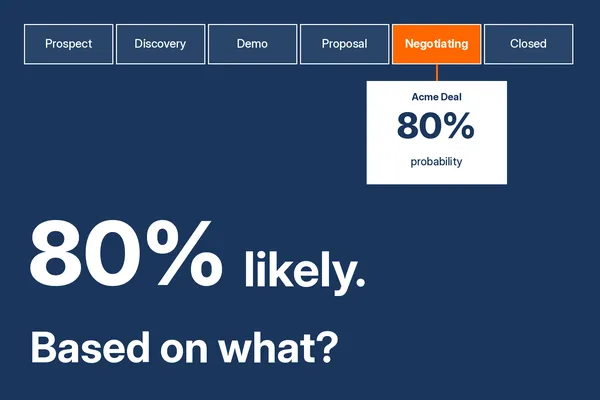
You're halfway through a pipeline review and a deal that's been sitting at 70% for three weeks comes up.
"Why does this deal close this quarter?"
The rep gives you the close date, says the demo went well, explains the prospect’s problem is real, and says the champion loves the product.
You ask again: “Why does the buyer have to act this quarter?”
The answer is less certain. You may hear that the prospect wants to move quickly or that the next meeting is already scheduled. What you may not hear is what the problem is costing the buyer, what happens if nothing changes, why timing matters now, or what measurable outcome would justify the investment. Deals that stall without that answer are common: Challenger's analysis of 2.5 million recorded sales conversations found that 40-60% of lost deals ended in no decision, and that win rates were 30% in calls with medium levels of indecision and 6% in calls with high levels.
Your reps already know they're supposed to uncover pain, quantify business impact, establish urgency, identify the right stakeholders, and build a case for change. You've probably trained them on those concepts more than once. They're also the foundations of value-based selling: connecting the buyer's problem to measurable business consequences and a defensible reason to invest. The gap is in execution. Nothing in the normal sales week consistently helps reps turn what buyers say across multiple conversations into a complete case for change.
The business case gets built between conversations. A rep has to connect something the buyer said Tuesday with something another stakeholder said two weeks earlier, recognize what's still missing, and decide what the next conversation needs to accomplish.
Your Team Probably Doesn't Need Another Slide Explaining MEDDIC
A rep finishes discovery feeling good. The prospect described real business challenges, asked smart questions, and agreed to another meeting. The opportunity advances, the demo happens, and the buyer responds positively.
Then the forecast call starts, and you start asking questions. What's the financial impact? Who actually owns the problem? Has the economic buyer agreed that fixing it is a priority? Why does this have to happen this quarter? Suddenly the deal doesn't look nearly as qualified.
The rep may not have done anything obviously wrong. They conducted discovery, documented pain, booked the next meeting, and moved the opportunity through your sales process. What they didn't do was accumulate enough buyer-supported evidence to prove that the organization has a case for change. And that means risk.
That gap matters more in complex B2B purchases. Forrester's The State of Business Buying, 2026, based on a survey of nearly 18,000 business buyers, found that 13 internal stakeholders and nine external participants influence the typical buying decision. Procurement professionals also make decisions in 53% of purchases. Convincing one enthusiastic contact isn't the same as building enough internal support to get a deal approved.
Reps need to notice, while there's still time to act, that the buyer never quantified the impact before the last discovery call, that finance hasn't been involved before the proposal goes out, or that a passing comment about a hiring freeze points to the buyer's capacity problem.
Why Your Best Rep Builds the Business Case, and Another Rep Misses It
Your strongest reps often make these connections almost instinctively. Say a buyer mentions that transaction volume is expected to double next quarter. Your best rep hears more than a growth forecast. They start asking what doubling volume means for staffing, capacity, costs, customer experience, and the consequences of keeping the current process.
Another rep hears the same comment and writes: "Volume expected to double."
You can standardize methodology, qualification criteria, CRM stages, messaging, and playbooks, but that gap is still hard to close at scale. You're relying on individual sellers to recognize what matters, tie it to earlier conversations, and ask the right follow-up question. One place to start is standardizing how reps prepare for discovery, not just the questions they ask: when every rep arrives knowing what changed at the account, what the buyer likely owns, and which problem is worth testing, the quality of the first call depends less on who happens to run it.
Managers can catch those gaps when they're on the call, but they aren't on most calls. By the time a missing business case surfaces in the pipeline review, the rep may already be several conversations further into the deal. "Coach your reps better" isn't a scalable answer. The coaching has to reach the rep between the call where the evidence surfaced and the next call where they can act on it.
What Evidence Does a Strong B2B Sales Business Case Need?
A strong B2B sales business case is the buyer-supported rationale for making a change. It explains what's happening today, how the problem affects the business, why action matters now, what outcome the buyer wants, and what achieving it could mean for the organization.
Validate five types of evidence:
1. The Buyer's Current Business Problem
Look past the symptom raised on the first call to what's actually happening. What's causing the problem? Who does it affect? What breaks when conditions change?
2. The Business Impact of the Problem
"The buyer doesn't like the current process" isn't impact. The real impact may be lost revenue, higher costs, wasted time, slower growth, churn, missed targets, or risk.
Quantify it where possible, using buyer-validated inputs rather than seller assumptions. An ROI model that rests on assumptions the buyer never validated won't survive finance scrutiny.
3. A Reason to Act Now
A serious problem isn't automatically urgent. A legitimate forcing function might be a growth target, budget deadline, contract renewal, leadership initiative, regulatory requirement, hiring constraint, or expansion.
Urgency should come from a business event that changes the consequences of waiting. Conduct a cost-of-inaction analysis in collaboration with the buyer to surface what delaying the decision could mean in lost revenue, higher costs, constrained capacity, or increased risk. This can dramatically help the prospect reinforce their own business case.
4. The Desired Business Outcome
Clarify what should be different once the problem is solved: shorter processing times, more capacity, lower risk, faster onboarding, reduced costs, or growth without additional headcount.
5. The Potential Business Value
Connect the desired outcome to something the organization cares about, such as revenue, cost, productivity, risk, customer experience, or growth. The strongest business case is one the buyer recognizes as their own. This is where the true ROI lives.
Why B2B Deals Stall Without an Internal Buyer Business Case
A business case has to hold up inside the buyer's organization. Your champion may have to explain the initiative to finance, procurement, IT, legal, operations, or an executive sponsor. Those people weren't necessarily on the discovery call, and they don't care that the demo went well.
They will want to know why they should invest, why now, what happens if they wait, what outcome they are buying, and who else supports it. Your champion or a committee has to answer those questions when you're not in the room.
A 2025 Gartner survey of 632 B2B buyers found that 74% of buyer teams show "unhealthy conflict" during the decision process. Buying groups that reach consensus were 2.5 times more likely to report a high-quality deal. When sellers focus only on discovering pain, they're asking their champion to build the rest of the argument alone. Value-based selling gives that champion a stronger internal case by tying the proposed change to outcomes the broader buying group cares about.
Here's a test for your next pipeline review: Could the buyer explain and defend the case for change in a meeting the seller isn't attending?
If not, the opportunity may be less advanced than its CRM stage suggests and, in many cases, leads to “no decision” or “closed lost.”
How Pipeline Stages Create an Illusion of Progress
Many sales organizations still define stages around seller activity: discovery completed, demo delivered, technical validation completed, proposal sent. Those milestones are easy to track and easy to mistake for buyer progress.
A deal can be active without being qualified. The buyer may attend every meeting, respond quickly, praise the demo, and already have the proposal. None of that shows that the organization has a reason to change.
Before advancing an opportunity, look for evidence of:
A clearly defined business problem
Meaningful business impact
A reason to act within a defined timeframe
Desired business outcomes
Articulated and validated value hypothesis
Stakeholder alignment
A credible decision path
A clear next step
A deal at 70% because a proposal was sent is a different animal from one at 70% because the economic buyer has confirmed the impact, acknowledged the consequences of waiting, aligned the buying group, and established a decision process.
Revenue Growth Agent's Solution Proposal Agent is built around that distinction on the proposal side: it drafts from what the buyer said on the discovery call and builds a budgetary ROI from the value quantified there, rather than starting from a template.
Why Traditional Sales Tools Don't Fully Solve the Execution Problem
Methodology training teaches what good discovery should uncover, qualification scorecards create shared criteria, CRM fields store information, ROI calculators express value, and call recording preserves conversations. But most of these tools still depend on reps translating messy, nonlinear conversations into the methodology after the fact.
Consider a rep who finishes a 45-minute discovery call and immediately joins another meeting. Two hours later, they update the CRM from memory. That's not unusual. Salesforce's 2026 State of Sales report, based on 4,050 sales professionals, found that the average seller spends only 40% of their time selling.
Under that kind of pressure, only the most obvious pain points make it into the CRM. A passing comment about a hiring freeze, contract renewal, or CFO initiative may get lost. What matters is whether those details are in front of the rep when they decide what to do next. The same applies before the call: Revenue Growth Agent's guide to sales meeting preparation notes that manual prospect research can take 30 to 60 minutes per meeting, which is why sellers often skip it and improvise, and argues that preparation only becomes consistent when it is fast enough to repeat before every meeting.
Sales Deals Are Often Won or Lost Between Calls
After a call, the AI notetaker transcript lands in a platform, CRM notes get written later, and a follow-up email goes out. Somewhere in that sequence, important evidence from the buyer leaks.
The prospect may have mentioned a growth initiative starting in six months. The champion may have admitted that procurement hasn't been involved. The buyer may even have quantified the consequences of the problem without anyone recognizing that it could anchor the business case. Those moments matter because the next call is where the seller can validate or expand on them.
After every meaningful interaction, your sales process should help sellers answer three questions:
What did we learn?
What's still missing?
What does the next conversation need to accomplish?
How AI Can Help Reinforce Good Selling Between Calls
AI can help organize buyer evidence across conversations, identify connections sellers might overlook, and flag information that hasn't been validated. Its greatest value isn't summarizing what happened. It's helping the rep decide what to do next.
One call may reveal that the buyer is struggling with a manual workflow, and another that transaction volume will double next quarter. Put together, those facts point to a much stronger line of discovery: whether the current process can support that growth, whether staffing will need to increase, and when capacity becomes a constraint. A 2026 Gartner survey of 227 chief sales officers found that sales organizations providing AI-enabled next-best actions are 2.6 times more likely to achieve commercial growth.
AI shouldn't invent urgency, ROI, or buyer intent. In a separate 2026 Gartner survey of 645 B2B buyers, 51% said they worry about misleading GenAI information, while 69% said they prefer to validate AI-generated insights with a sales rep. Use AI to help the seller see what evidence exists and what still needs to be earned. Don't use it to make the business case for the buyer.
How Revenue Growth Agent Helps Reps Build the Business Case Between Calls
That between-call work is one of the core features Revenue Growth Agent is built around. Revenue Growth Agent is an AI-powered sales intelligence platform that turns buyer conversations into deal insights and reinforces the sales behaviors teams already expect from their reps. That makes it particularly relevant to value-based selling, where the quality of the sales process depends on continually connecting buyer evidence to business impact and value. It’s part sales execution platform and part sales coach.
After a buyer interaction, Revenue Growth Agent can identify:
Buyer problems, needs, and priorities
Evidence of business impact
Missing discovery information
Qualification gaps or deal risks
Buyer and seller commitments
Stakeholder concerns
Recommended questions and next actions
Relevant messaging, proof points, and customer outcomes
In practice, it looks like this. A rep finishes discovery knowing that the buyer has a capacity problem. Revenue Growth Agent may also surface that the buyer mentioned an aggressive growth target, expects transaction volume to increase, and hasn't brought finance into the conversation.
The next call now has a specific job: validate the financial and operational impact, understand how finance will evaluate the initiative, and determine whether the growth target creates a legitimate timeframe for action. Compare that with walking into the meeting with a generic goal like "continue discovery."
What Revenue Growth Agent Users Report Changes Between Calls
Users say reps get relevant insights, missing evidence, and recommended next questions while the conversation is still fresh. The business case stays in front of the seller instead of being reconstructed later from memory, CRM notes, and AI notetaker transcripts.
Users also report that opportunities move forward and prospects become more engaged. When sellers accurately reflect what buyers have said and build on those priorities with thoughtful follow-up questions, the conversation shifts from completing a qualification checklist to helping the buyer think through the decision. For sales leaders, the added benefit is more constant coaching and consistent execution across the team. Your strongest rep may already do this instinctively. The goal is to help all reps do it on all deals.
Frequently Asked Questions
How can AI help B2B sales reps after a buyer call?
AI can help reps turn a completed conversation into a clearer plan for the next one. Rather than simply summarizing the call, AI-assisted sales tools can surface buyer problems, business impact, stakeholder concerns, commitments, qualification gaps, and information that still needs validation. The goal is to help the rep quickly answer three questions: What did we learn? What is still missing? What should the next conversation accomplish?
What is the difference between AI call summarization and AI-assisted sales intelligence?
Call summarization tells a rep what happened. AI-assisted sales intelligence helps the rep understand what the conversation means for the opportunity. It can connect evidence across multiple buyer interactions, identify gaps in the business case, and recommend questions or next actions based on what has—and has not—been established. That makes AI more useful for advancing a deal than a transcript or meeting recap alone.
How can AI help sales reps build stronger buyer business cases?
AI can organize evidence that is often scattered across calls, notes, emails, and CRM records. For example, one conversation may reveal a capacity problem while another reveals an upcoming growth target. AI can connect those signals and help the rep recognize that the next conversation should explore whether the current process can support that growth, what the financial consequences might be, and whether the timing creates a legitimate reason to act.
Can AI determine whether a sales opportunity is truly qualified?
AI can help assess the evidence behind qualification, but it should not make unsupported assumptions about buyer intent. It can show whether the team has established business impact, urgency, stakeholder alignment, desired outcomes, decision criteria, and a credible next step, and flag what remains unknown, giving reps and managers a clearer view of the evidence supporting the opportunity.
A Strong B2B Business Case Is Built One Conversation at a Time
You've already taught your reps how to uncover pain, quantify impact, identify decision-makers, establish urgency, and sell on value. The harder problem is making sure those behaviors show up consistently across a live pipeline, so every interaction adds to the buyer's case for change.
To see how Revenue Growth Agent connects buyer evidence across interactions and helps your reps decide what to validate next, schedule a free 30-minute consultation.
Prefer to explore the platform yourself? Start a 14-day free trial of Revenue Growth Agent.